

How to Choose the Right Onion Powder Manufacturer in India: A Complete Buyer’s Guide
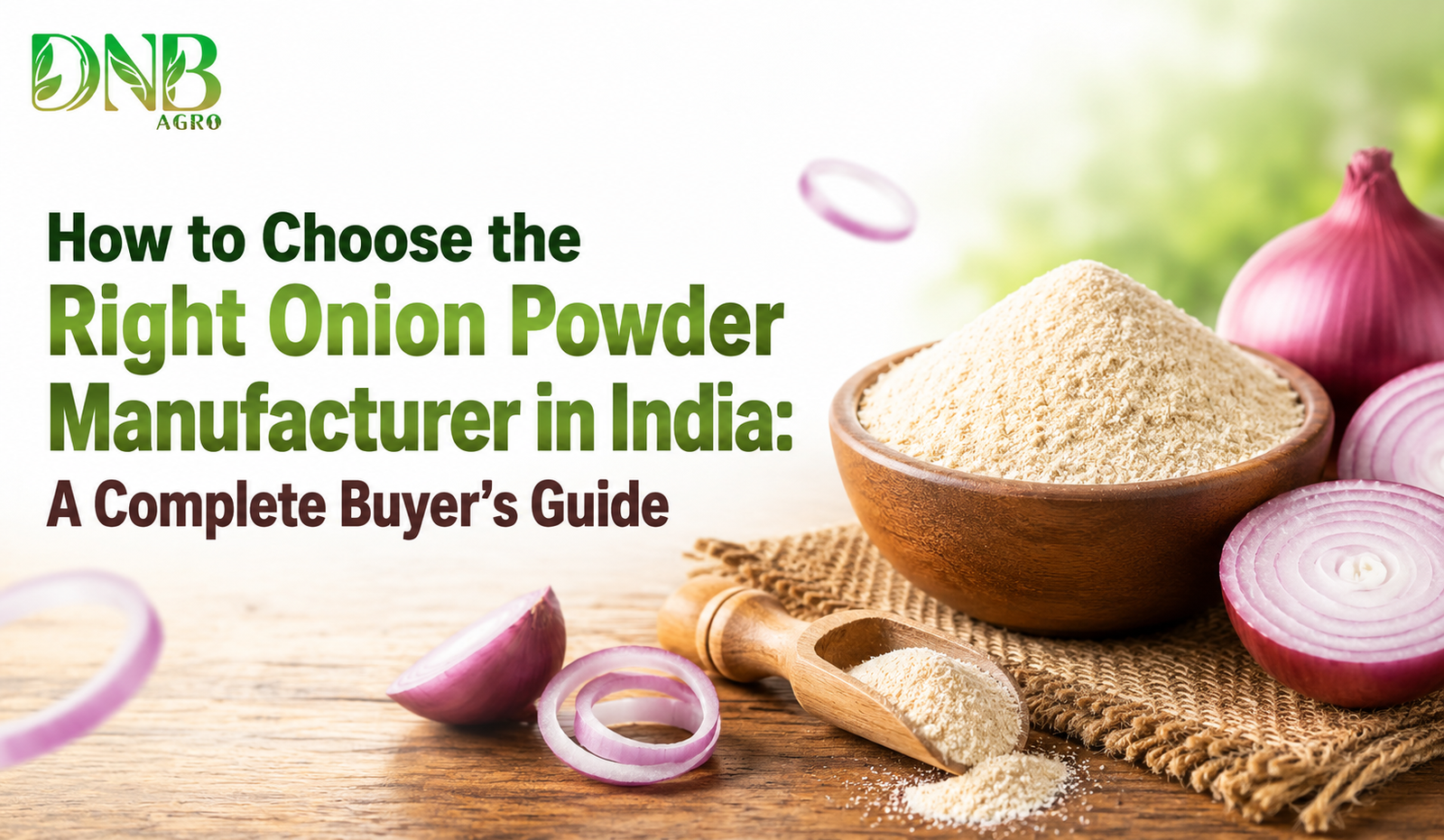
Sourcing onion powder for commercial use is not just about finding the lowest price per kilogram. For importers, distributors, food manufacturers, private-label brands, and ingredient buyers, the real challenge is finding a supplier that can deliver consistent quality, reliable documentation, suitable packaging, and dependable repeat supply.
That is why choosing the right onion powder manufacturer in India requires a practical evaluation. A supplier may send an impressive sample, but the bigger question is whether the same level of quality can be maintained across larger and repeated orders.
This guide explains the most important factors to assess before choosing a manufacturer, especially if you are sourcing bulk onion powder for food production, distribution, or export markets.
Why India Is a Major Sourcing Destination for Onion Powder
India has a strong agricultural base and a large food-processing ecosystem, making it a natural sourcing market for dehydrated vegetable ingredients. Onion powder is used across seasoning blends, snacks, soups, sauces, gravies, ready meals, dry mixes, and many other commercial food applications.
That broad supplier base gives buyers options, but quality, process control, transparency, and commercial reliability can vary. The better question is not simply, “Who has the best price?” It is, “Which supplier can meet our requirements consistently?”
1. Evaluate Product Quality Before Comparing Prices
Price matters, especially in bulk buying, but it should not be the first and only filter.
Two onion powders that look similar in a quotation may differ in particle size, aroma, moisture, colour, flavour strength, purity, or processing consistency. These differences can affect formulation, production efficiency, shelf stability, and the finished product.
Before comparing offers, ask for a clear product description and the specifications relevant to your application. Important factors may include moisture level, mesh size, sensory profile, appearance, ingredient composition, microbiological parameters, packaging, storage guidance, and shelf life.
A seasoning manufacturer may prioritize flavour and particle consistency, while a sauce producer may care more about dispersion and repeatability. A good onion powder supplier should understand that difference.
2. Understand How the Onion Powder Is Processed
The quality of dehydrated onion powder starts long before the milling stage.
Raw onion selection, cleaning, slicing or preparation, dehydration, handling, milling, inspection, and packing can all affect the final ingredient.
You do not need to audit every machine, but you should understand whether the supplier follows a controlled and repeatable process. Ask how raw onions are selected and prepared, how dehydration and milling are controlled, and what checks occur before packing.
DNB Agro, for example, follows a stated six-step process that includes raw-material selection, cleaning and preparation, controlled drying, precision milling, quality evaluation, and secure packing.
For commercial buyers, that type of structured process matters because consistent output usually depends on controlling several stages rather than relying only on a final inspection.
3. Check Batch-to-Batch Consistency
A good sample is useful, but it does not prove long-term consistency.
Bulk buyers should think beyond the first order. If onion powder is part of a standardized formulation, significant variation between batches can create production problems.
Changes in colour, aroma, particle characteristics, or moisture may force formulation adjustments or additional quality checks. Over time, that can cost more than the savings gained from a slightly cheaper supplier.
Ask how the manufacturer manages repeatability through raw-material selection, process control, finished-product checks, batch identification, and packing. Agricultural ingredients naturally vary, so the goal is controlled variation that remains commercially acceptable, especially across repeat orders.
Planning to source onion powder in bulk? Contact DNB Agro to discuss your required specifications, quantity, application, and repeat supply requirements.
4. Verify Documentation and Export Readiness
When buying for international markets, product quality is only one part of the transaction.
Importers may require specifications, certificates of analysis, traceability information, commercial documentation, packing details, or other shipment records. Requirements vary by destination and transaction, so documentation for onion powder export from India should be discussed before the order is finalized.
Buyers supplying the United States, Europe, or other regulated markets should confirm current import and food-compliance requirements with the relevant authorities or qualified compliance professionals.
A responsible manufacturer should not make vague claims such as “all certificates available” without explaining what can actually be supplied.
Transparency is more useful than broad promises.
5. Assess the Manufacturer’s Quality-Control Mindset
One of the easiest ways to evaluate a supplier is to listen to how they talk about quality.
Terms such as premium, natural, pure, or export quality do not explain how the product is controlled. A stronger supplier can explain what happens during raw-material selection, processing, finished-product evaluation, and packing.
At DNB Agro, quality is positioned as an operational responsibility rather than only a marketing claim. The company emphasizes raw-material condition, controlled processing, consistency, moisture management, appearance, and responsible packing.
For a buyer, the useful question is simple: can the supplier explain how quality is managed in practice?
If the answer is vague, that deserves attention.
6. Confirm Bulk Supply Capability
A company that can produce onion powder is not automatically the right partner for large or repeat orders.
Bulk purchasing adds pressure on production, packaging, dispatch, and communication. Before ordering, discuss expected quantity, purchasing frequency, packaging format, lead time, and potential future demand.
DNB Agro is structured around commercial ingredient supply and recurring procurement across a broader portfolio of fruit, vegetable, spice, and superfood powders. That makes supply planning and repeat-order capability especially relevant to its B2B positioning.
The goal should be to find a supplier that can grow with your requirement, not one that only works when volumes are small or irregular.
Looking for a reliable bulk onion powder supply? Get in touch with DNB Agro with your required quantity, packaging preference, delivery location, and purchase frequency to discuss your sourcing needs.
7. Review Packaging and Storage Requirements
Packaging directly affects product protection.
Onion powder is a dry ingredient, but poor packaging or improper storage can still create quality concerns. Moisture exposure, handling damage, or weak sealing can reduce product stability and create unnecessary losses.
Ask what bulk formats are available, how packs are sealed, what net weights are offered, and how the product should be stored. International shipments also demand packaging suited to longer transport and warehousing cycles. The best format depends on your receiving, storage, and production setup.
Packaging should therefore be discussed before the commercial order is finalized, not treated as a minor detail after pricing has been agreed.
8. Pay Attention to Communication Quality
Supplier communication is often an early indicator of how the relationship may work after the order is placed.
A reliable supplier should be able to discuss specifications, application, quantity, packaging, documentation, commercial terms, and timelines without creating confusion.
Be cautious about changing information, vague answers, unrealistic promises, unexplained pricing, or pressure to order before basic requirements are clear. Strong B2B communication is about accuracy and consistency, not simply speed.
For international procurement, clear communication becomes particularly valuable because documentation, shipping coordination, and time-zone differences already add complexity.
9. Request a Sample Before a Major Order
For many commercial buyers, sampling is one of the most practical supplier-qualification steps.
A specification sheet tells you what the product should be. A sample helps you understand how the ingredient performs in your actual application.
Buyers may evaluate appearance, aroma, flavour, particle size, dispersion, and finished-product performance. But sample approval is not the end of qualification. Connect the approved sample to an agreed commercial specification so the bulk order is measured against the same expectations.
That reduces the risk of approving one product and receiving something noticeably different when commercial quantities arrive.
Evaluating onion powder for your food product or commercial application? Contact DNB Agro to discuss product requirements, samples, specifications, and bulk procurement.
10. Check Whether the Supplier Understands Your Application
The right onion powder supplier should ask what you are using the ingredient for.
Onion powder is used in seasoning blends, snacks, soups, sauces, gravies, ready-to-cook products, dry mixes, processed foods, and food-service applications. Different uses may require different characteristics, so application knowledge leads to a better discussion about product fit, packaging, quantity, and quality.
Instead of asking only for “the best onion powder,” explain what your company is producing and what matters most in the formulation.
That makes the sourcing discussion more specific and more commercially useful.
11. Know Whether You Are Buying From a Manufacturer or an Intermediary
There is nothing wrong with buying through a distributor or trading company, but buyers should understand the supply chain.
If you believe you are dealing directly with an onion powder manufacturer in India, confirm who actually produces the ingredient. Direct relationships may provide better visibility into process control, specifications, production planning, and repeat supply. If an intermediary is involved, clarify their role. Transparency matters.
For long-term procurement, knowing who controls manufacturing also makes accountability easier to understand.
12. Compare Suppliers on More Than Price
When several quotations are available, compare product specification, processing, quality checks, packaging, bulk capability, documentation, application fit, communication, lead time, commercial terms, and repeat-order reliability. Then compare price within that context.
A low quote can be attractive, but if it comes with poor communication, unclear specifications, weak documentation, or inconsistent supply, it may create higher costs elsewhere.
The best supplier is not automatically the cheapest. It is the one that offers the strongest overall fit for your product, procurement process, and risk tolerance.
Why DNB Agro Is Worth Considering for Bulk Onion Powder
DNB Agro, operated by Terrablend Agro Food Processing Private Limited, manufactures and supplies fruit, vegetable, spice, and superfood powders for commercial and industrial applications.
Its portfolio includes onion powder alongside other fruit, vegetable, spice, and superfood powders. Its stated manufacturing approach centers on controlled processing, consistency, quality evaluation, secure packaging, and recurring B2B supply.
For buyers seeking an onion powder manufacturer in India, the value is not simply availability. It is the opportunity to work with a business structured around commercial ingredient requirements and long-term sourcing relationships.
DNB Agro emphasizes carefully selected raw materials, controlled drying, precision milling, quality evaluation, responsible fulfilment, and support for bulk and repeat procurement.
That positioning is particularly relevant for importers, distributors, wholesalers, private-label businesses, food manufacturers, and ingredient sourcing companies looking for a supply relationship rather than a one-time transaction.
Need onion powder for commercial or bulk requirements? Contact DNB Agro to discuss your application, specifications, order quantity, packaging, destination, and documentation requirements.
What to Include in Your Onion Powder Inquiry
A detailed inquiry helps the supplier respond with more useful information.
Include your required quantity, target market, intended application, preferred packaging, expected purchase frequency, desired product characteristics, delivery location, and any required documentation.
If you already have a specification, share it. If not, explain how the ingredient will be used.
For buyers evaluating bulk onion powder, DNB Agro can be approached with these commercial requirements so the discussion starts from product fit and sourcing needs rather than price alone.
A strong supplier relationship is ultimately built around consistent product expectations, clear communication, dependable processing, and the confidence that repeat requirements will receive the same level of attention as the first order.
FAQs
1. How do I choose the best onion powder manufacturer in India?
Start by comparing product specifications, processing methods, quality controls, packaging, documentation, communication, and repeat-supply capability. Price should be considered only after confirming that the supplier can meet your technical and commercial requirements.
2. What should I check before buying bulk onion powder?
Check the product specification, moisture parameters, particle or mesh size, flavour and aroma profile, packaging, shelf life, batch consistency, quality documentation, minimum order requirements, and suitability for your intended application.
3. Is dehydrated onion powder suitable for industrial food production?
Yes. Dehydrated onion powder is widely used in seasoning blends, soups, sauces, snacks, dry mixes, ready meals, and other processed foods. The correct specification depends on the formulation and processing requirements of the buyer.
4. Should I request a sample before placing a bulk order?
In most commercial sourcing situations, yes. A sample allows your product-development or quality team to assess the ingredient before committing to a larger quantity. The approved sample should ideally be linked to a clear commercial specification.
5. What documents are commonly required for onion powder export from India?
The exact documents depend on the destination country, product, shipment structure, and buyer requirements. Buyers should confirm current import and food-compliance requirements before ordering and ask the supplier which product and shipment documents can be provided.
6. Why is batch consistency important when buying onion powder?
Batch consistency helps manufacturers maintain stable formulations, flavour profiles, processing behaviour, and quality standards across production runs. Significant variation can create additional testing, reformulation, or quality-control work.
7. Can DNB Agro supply onion powder for bulk commercial requirements?
DNB Agro positions its business around commercial and bulk ingredient supply, including onion powder and other fruit, vegetable, spice, and superfood powders. Buyers should contact DNB Agro with their quantity, application, packaging, destination, and documentation requirements so the company can assess the specific sourcing requirement.