

How to Use Cabbage Powder: 10 Uses, Cooking Ideas & Tips
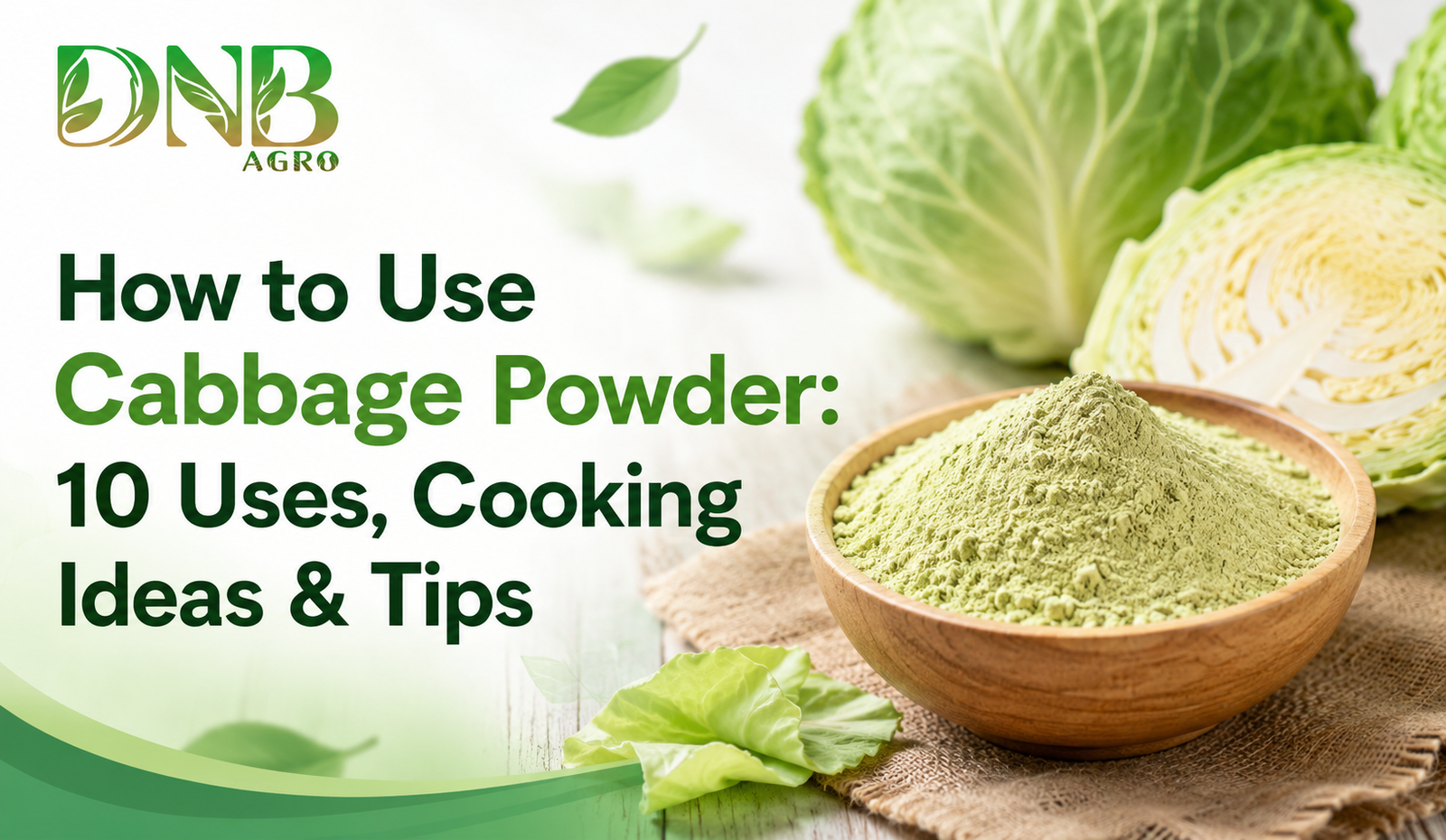
Cabbage powder is a convenient way to use cabbage without washing, chopping, and handling fresh leaves every time you cook. It can be stirred into soups, sauces, curries, smoothies, dips, seasoning blends, rice, noodles, egg dishes, and some doughs or batters.
Cabbage powder is a dried vegetable ingredient, not a perfect one-to-one substitute for fresh cabbage. Much of its water has been removed, so it is easier to store and incorporate into recipes, but it will not provide the same crunch as fresh cabbage.
This guide covers 10 cabbage powder uses, mixing and rehydration, dosage, taste, storage, and buying considerations.
What Is Cabbage Powder?
Cabbage powder is made by drying cabbage and milling the dried material into a powdered ingredient.
You may see terms such as dried cabbage powder, powdered cabbage, cabbage vegetable powder, or cabbage flour. These terms are not always used consistently, so check the ingredient declaration and product specification rather than assuming similarly named products are identical.
Cabbage powder can serve as both a cooking ingredient and a food-manufacturing ingredient. At home, it can add cabbage flavor and vegetable character to recipes. Commercially, it can be incorporated into soups, seasonings, sauces, dry mixes, and other formulations.
How Do You Use Cabbage Powder?
Common applications include soups, broths, sauces, gravies, curries, smoothies, dips, seasoning blends, rice, noodles, pasta, egg dishes, savory doughs, batters, and rehydrated preparations.
For a new product, start with a small amount, mix thoroughly, taste, and increase gradually. There is no universal cabbage powder dosage because products can differ in moisture, concentration, particle size, and processing.
10 Uses of Cabbage Powder
1. Add Cabbage Powder to Soup
Soup is one of the simplest ways to use cabbage powder. Stir it into vegetable soup, broth, lentil soup, noodle soup, tomato soup, or a creamy preparation.
For a smoother result, mix the powder with a little broth or water first, then add it to the pot. This helps prevent dry pockets and clumps.
Cabbage powder pairs naturally with onion, garlic, carrot, potato, tomato, herbs, black pepper, and vegetable stock.
2. Mix It Into Sauces, Gravies, and Curries
Cabbage powder can be incorporated into tomato sauces, gravies, curry bases, and other savory sauces. Because it absorbs moisture, it may also slightly thicken the preparation.
Whisk it into the liquid part of the sauce before combining it with thicker ingredients. Add more gradually if you want a stronger vegetable flavor.
It can work well with garlic, onion, tomato, herbs, pepper, and spices.
3. Blend It Into Smoothies
Can you put cabbage powder in a smoothie? Yes, provided the product is food-grade and intended for consumption.
Cabbage has a distinct vegetable taste, so it is usually easier to balance with fruit or other fresh ingredients. Apple, pineapple, cucumber, banana, berries, and spinach are practical combinations.
A blender generally distributes the powder better than hand stirring, although it may not completely dissolve because it remains plant material.
4. Stir It Into Dips and Spreads
Cabbage powder works well in moist foods such as hummus, yogurt-based dips, bean spreads, mashed vegetables, and savory sandwich spreads.
Add the powder gradually and mix thoroughly. If it makes the mixture too thick, loosen it with a suitable liquid already used in the recipe.
This lets cabbage contribute flavor without adding visible pieces of fresh cabbage.
5. Use It in a Seasoning Blend
Cabbage powder can be combined with other powdered ingredients to make a vegetable seasoning. Try pairing it with onion powder, garlic powder, paprika, dried herbs, or black pepper.
The blend can be used on roasted vegetables, fries, noodles, crackers, snacks, and savory mixes.
For commercial applications, particle size and moisture matter because they can influence powder flow and distribution.
6. Add It to Rice, Noodles, and Pasta
Cabbage powder is convenient in quick meals. Mix a small quantity into cooked rice with your usual seasonings, or incorporate it into the broth or sauce used with noodles and pasta.
It can fit into vegetable fried rice, stir-fried noodles, garlic noodles, tomato pasta, instant noodle seasonings, and savory rice bowls.
Adding the powder to a sauce or cooking liquid usually gives better distribution than sprinkling a large amount over finished food.
7. Mix It Into Eggs
Cabbage powder can be used in scrambled eggs, omelets, frittatas, and similar dishes.
Whisk it into the eggs before cooking so the powder has time to hydrate and spread evenly. It can be paired with onion, mushrooms, spinach, herbs, cheese, bell peppers, and black pepper.
Start small because a large amount can create a heavy vegetable taste or change the texture.
8. Use It in Doughs and Savory Batters
Cabbage powder can be incorporated into savory crackers, flatbreads, vegetable breads, snack products, savory pancakes, and other dough- or batter-based foods.
Because powdered vegetables can absorb water, adding cabbage powder may require some adjustment to the liquid.
For commercial formulations, moisture, mesh size, and batch consistency can influence mixing, baking, texture, and final product performance.
9. Rehydrate Cabbage Powder
You can rehydrate cabbage powder when you want a moist ingredient for a recipe.
Place the powder in a bowl and add water gradually while stirring. Let it absorb moisture, mix again, and add more liquid until you reach the desired consistency.
A practical process is:
-
Measure the powder.
-
Add a small amount of water.
-
Stir or whisk thoroughly.
-
Allow brief hydration.
-
Adjust the liquid as needed.
-
Add the mixture to the recipe.
There is no single rehydration ratio for every product. Follow the manufacturer's instructions when available.
Rehydrated powder can be useful in soups, fillings, sauces, and savory mixtures, but it will not recreate the crispness of fresh cabbage.
10. Use It in Savory Vegetable Blends
Cabbage powder can also be included in savory drinks, vegetable-focused dry mixes, soup bases, and other food formulations.
Because cabbage has a recognizable flavor, it can be balanced with tomato, cucumber, herbs, or other vegetable ingredients rather than used in a large amount on its own.
This application is particularly relevant for businesses developing convenience foods, seasoning blends, instant soups, and vegetable-based mixes.
How Much Cabbage Powder Should You Use?
There is no standardized serving size for every cabbage powder. As a practical kitchen starting point, about 1/2 teaspoon per individual serving is reasonable, followed by adjustment based on taste and recipe consistency.
The right amount depends on product concentration, moisture, particle size, recipe volume, liquid content, and desired cabbage flavor.
For commercial use, do not rely on a generic household dosage. Use the supplier's specification and validate the inclusion level during formulation and sensory testing.
What Does Cabbage Powder Taste Like?
Cabbage powder generally has a mild to noticeable cabbage flavor with savory, earthy, or vegetable-forward notes. Flavor can vary with cabbage variety, raw material quality, drying method, processing, and storage.
If you are trying it for the first time, combine it with familiar flavors such as onion, garlic, tomato, herbs, or mild spices. Start small and adjust.
Does Cabbage Powder Dissolve in Water?
Usually, no. It is more accurate to say that cabbage powder disperses and hydrates in water.
For better results, add it gradually, whisk continuously, and allow time for hydration. In smoothies, blending usually gives better dispersion than spoon mixing.
A dried vegetable ingredient therefore behaves differently from a fully soluble drink powder.
Cabbage Powder vs. Fresh Cabbage
Fresh cabbage is preferable when you need crispness, visible shredded leaves, fresh texture, or substantial volume. Cabbage powder is more convenient when you need a shelf-stable ingredient that can be measured and mixed quickly.
Powder can be useful for soups, sauces, seasonings, dry mixes, smoothies, and food manufacturing. It is less suitable for dishes where fresh cabbage structure is central, such as crunchy slaws.
Think of cabbage powder as a different ingredient format rather than a perfect replacement.
Does Cabbage Powder Have the Same Nutrition as Fresh Cabbage?
Not necessarily. Cabbage naturally provides nutrients such as vitamin C, vitamin K, folate, fiber, and various plant compounds, but processing and storage can affect individual nutrients.
The final nutritional profile depends on the raw material, processing method, concentration, serving size, and storage conditions. A product's nutrition information or laboratory analysis is therefore more reliable than assuming it has exactly the same nutritional profile as fresh cabbage.
Avoid treating cabbage powder as nutritionally identical to fresh cabbage unless product-specific evidence supports that claim.
How to Store Cabbage Powder
Moisture is a major concern with powdered vegetables. Keep cabbage powder tightly sealed in a cool, dry place away from direct sunlight.
Use a clean, dry utensil and avoid exposing the powder to steam or humidity. Follow the manufacturer's storage instructions and stated best-before date.
For bulk buyers, food-grade packaging and protective inner liners can be especially important during storage and transportation.
What Should You Check Before Buying Cabbage Powder?
Look beyond the word "premium."
Check the ingredient declaration and confirm whether the product contains only cabbage or also salt, sugar, preservatives, colors, anti-caking agents, or fillers.
Then ask about the processing method, moisture specification, particle size, packaging, and available quality documentation. Commercial buyers may also need microbiological testing, batch identification, traceability information, or a certificate of analysis.
DNB Agro, for example, offers Cabbage Powder produced through a controlled vegetable-powder process covering raw-material selection, cleaning, drying, milling, quality inspection, batch identification, and commercial packaging. Its wider portfolio includes fruit, vegetable, spice, and superfood powders, with a focus on bulk and repeat B2B supply.
For any supplier, ask practical questions: Does the product match the application? Can the supplier provide the specification you need? Is packaging suitable? Can quality and batch details be documented? Can supply remain consistent as volumes grow?
Looking for cabbage powder for bulk or commercial applications? Explore DNB Agro’s Cabbage Powder to learn more about the product, or contact DNB Agro to discuss specifications, packaging, quantities, and sourcing requirements.
Cabbage Powder Benefits for Everyday Cooking
The main practical benefit of cabbage powder is convenience. It reduces preparation steps and makes a dried vegetable ingredient easier to store, measure, transport, and add to foods.
However, powders are not interchangeable. Processing, moisture, particle size, ingredient composition, and storage can influence how a product performs.
Final Tips for Using Cabbage Powder
Start with a familiar recipe such as soup, sauce, noodles, rice, or an omelet. Use a small amount first, mix thoroughly, taste, and increase gradually.
Pre-mix the powder with liquid when clumping is a problem, and follow product-specific instructions for rehydration and storage.
For commercial applications, evaluate the ingredient more carefully. Product specifications, quality testing, packaging, traceability, and repeat supply can matter as much as flavor.
Cabbage powder is not a replacement for every use of fresh cabbage. It is a flexible dried vegetable ingredient that can make certain recipes and food formulations faster, simpler, and easier to standardize.
For businesses sourcing cabbage powder for food processing, seasoning blends, instant mixes, or other commercial applications, contact DNB Agro to discuss your bulk requirements.
FAQs About Cabbage Powder
Can cabbage powder be eaten directly?
Food-grade cabbage powder can be incorporated into foods or beverages, but dry consumption is generally less practical than mixing it into a moist recipe or drink. Follow the product's intended-use instructions.
Can cabbage powder be added to soup?
Yes. Add it gradually to broth or soup and mix thoroughly. Pre-mixing it with liquid can help prevent clumps.
Can cabbage powder be used in smoothies?
Yes. Blend a small quantity with fruit, vegetables, or other ingredients that balance its vegetable flavor.
How much cabbage powder should I use?
There is no universal amount. About 1/2 teaspoon per individual serving is a practical starting point for home cooking, then adjust according to taste and the product's characteristics.
How do you rehydrate cabbage powder?
Add water gradually while stirring, allow the powder to hydrate, and adjust the liquid until you reach the desired consistency. Follow supplier instructions when available.
Can cabbage powder replace fresh cabbage?
It can replace fresh cabbage in some applications, including soups, sauces, seasonings, and dry mixes, but it will not provide the same crunch, moisture, or structure.
How should cabbage powder be stored?
Keep it tightly sealed in a cool, dry place away from direct sunlight and moisture, and follow the manufacturer's storage instructions.