

Top 10 Ginger Powder Uses in the Food Industry: Applications & Benefits (2026)
Fresh ginger works well in home kitchens, but commercial food production brings different challenges. At scale, manufacturers must manage preparation time, moisture, dosing, blending, consistency, and supply continuity.
For food manufacturers, seasoning companies, bakeries, beverage producers, ready-meal brands, ingredient distributors, and private-label businesses, ginger powder offers a practical way to add ginger flavor to dry and wet formulations.
Still, dry ginger powder is not a perfect replacement for fresh ginger in every recipe. Its flavor, particle size, moisture level, and behavior during processing can change the finished result. The key is knowing where it works best and what to evaluate before using it at scale.
What Is Ginger Powder?
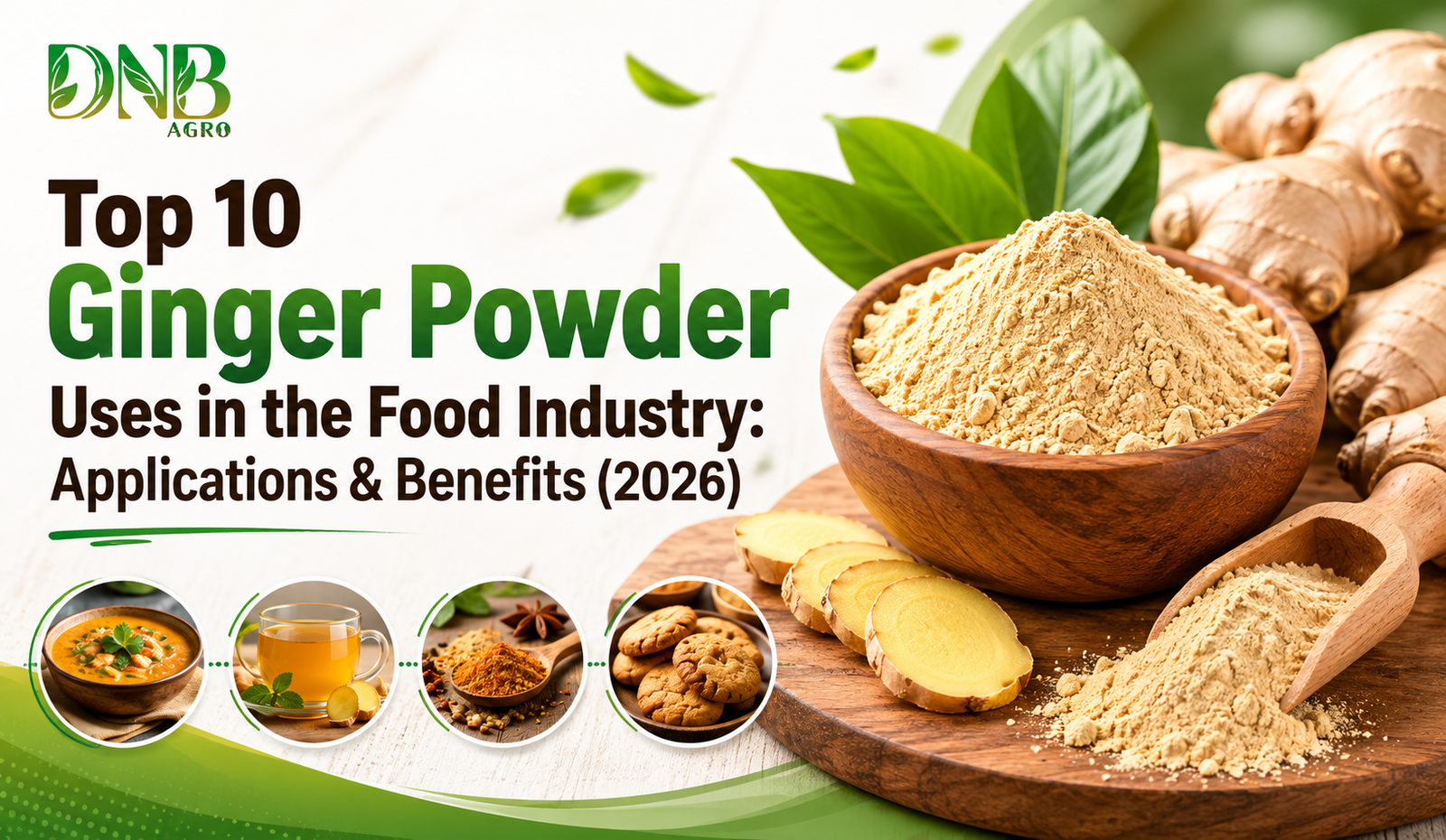
Ginger powder is made by drying ginger rhizomes and milling them into a fine powder. It may also be called dry ginger powder or ground ginger.
Compared with fresh ginger, powder is easier to store, transport, weigh, and blend into dry formulations. Its sensory profile is also different. Dry ginger generally gives a warmer, deeper spice note rather than the fresh, sharp character of newly cut ginger.
For manufacturers, that distinction matters. Ginger powder is best viewed as a distinct ingredient suited to applications where a dry, controlled, easy-to-handle format is preferred.
1. Seasoning Blends
Seasoning blends are one of the most common uses of ginger powder.
It can be blended with salt, chili, black pepper, garlic, onion, turmeric, herbs, sugar, and other powdered ingredients. Common applications include curry-style blends, masala mixes, dry marinades, spice rubs, and snack seasonings.
Manufacturers can add ginger powder directly to a dry blending system without preparing fresh ginger for each batch.
Particle size still matters. If the powder is much finer or coarser than surrounding ingredients, blend uniformity may suffer. Mesh size, moisture, aroma, color, and microbiological quality should therefore be considered together.
2. Snack Foods and Savory Coatings
Ginger powder can add warmth and aromatic spice to flavored chips, extruded snacks, roasted nuts, savory crackers, coated seeds, popcorn seasonings, and regional snack products.
It is usually combined with other flavors such as garlic, chili, pepper, citrus notes, sweetness, and savory ingredients.
It can be pre-blended into a seasoning system before application. The main formulation decision is intensity. A small amount may support other spices, while a higher level can become a defining flavor. Manufacturers should evaluate the finished snack rather than judging the powder only in its raw form.
3. Instant Soups, Noodles, and Ready-to-Cook Mixes
Dry ginger powder fits naturally into products built around premixes.
It can be used in instant soup powders, noodle seasoning sachets, ready-to-cook curry bases, gravy mixes, rice seasonings, sauce premixes, and meal kits.
Ginger powder can be weighed directly into the dry ingredient system without the additional moisture and preparation associated with fresh ginger.
The final taste should still be tested after hydration and cooking. Heat, water, fat, salt, and other spices can change how ginger is perceived, so bench testing should be followed by finished-product evaluation.
4. Sauces, Gravies, and Marinades
Ginger powder can be used in sauces, gravies, marinades, dipping sauces, stir-fry sauces, curry bases, and similar wet formulations.
Manufacturers can dose it directly into the recipe without separately preparing fresh ginger.
However, ginger powder is not the same as a fully soluble ginger extract or liquid flavor. Depending on particle size and formulation, some material may remain suspended or settle. Product developers should therefore test dispersion, texture, sedimentation, and final flavor before deciding whether the powder is suitable.
5. Bakery Products
Ginger powder is widely used in cookies, biscuits, cakes, muffins, gingerbread-style products, spiced loaves, bakery premixes, and seasonal baked goods.
Because bakery production relies heavily on dry ingredients, ginger powder is easy to incorporate alongside flour, sugar, cinnamon, cloves, nutmeg, and leavening agents.
This supports controlled dosing and repeatable production. Still, two powders can produce different results. Origin, raw material quality, drying conditions, particle size, and storage can influence aroma and pungency. If a bakery changes suppliers, the new ingredient should be tested before full-scale use.
6. Beverage and Tea Premixes
Ginger powder is commonly used in ginger tea, masala tea premixes, herbal beverage blends, instant drink powders, spiced cocoa, wellness beverage mixes, and foodservice formulations.
In beverages, mouthfeel, dispersion, and sediment matter alongside flavor.
A natural powdered spice may leave visible particles in the drink. That can be acceptable in a traditional or herbal-style beverage but undesirable in a product expected to dissolve completely. If a clear or highly soluble drink is required, another ginger ingredient format may be more appropriate.
7. Confectionery and Sweet Foods
Ginger powder can be used in hard candies, chews, chocolates, dessert mixes, sweet coatings, ginger-flavored sweets, and seasonal confectionery.
Its warm pungency can create useful contrast with sweetness and help a product develop a distinctive flavor profile.
There is no universal dosage for these applications. A lightly spiced chocolate and a strong ginger candy require very different levels. Small formulation trials are the safest starting point because heat, sugar, and fat can all change how ginger is perceived.
8. Meat, Poultry, and Plant-Based Protein Products
Ginger powder is useful in dry rubs, marinades, kebab seasonings, ready-meal systems, coated protein products, and plant-based meat formulations.
It often works as part of a broader savory flavor system with garlic, onion, chili, pepper, herbs, sweetness, acidity, or soy-style notes.
Its dry form makes centralized seasoning preparation and controlled weighing straightforward. Processing conditions still affect flavor, so testing should happen in the actual finished application rather than only in a dry seasoning sample.
9. Spice Blends and Culinary Premixes
Dry ginger powder is practical in curry powders, masala blends, cooking mixes, dry chutney systems, marinade powders, restaurant seasoning packs, private-label spice blends, and foodservice premixes.
It can be weighed, sieved, blended, packed, and transported using systems already common in spice manufacturing.
For buyers, this shifts attention toward specification control. Moisture, aroma, color, particle size, foreign matter, microbiological quality, packaging, and batch documentation all matter. A low price per kilogram is not valuable if flavor or flow characteristics change significantly from one shipment to the next.
10. Nutritional, Wellness, and Functional Food Formulations
Ginger powder is also used in nutritional powders, superfood blends, smoothie mixes, herbal food products, wellness beverages, and functional snack formulations.
This category requires careful communication.
Ginger has a long history of culinary and traditional use, but manufacturers should not turn that history into unsupported claims about treating, curing, or preventing disease. Labeling and health-claim requirements can differ between India, the United States, Europe, and other markets.
The better approach is to describe the ingredient accurately and review the regulatory requirements that apply where the finished product will be sold.
Key Ginger Powder Benefits for Food Manufacturers
The main ginger powder benefits in commercial production are practical.
It can reduce preparation work because manufacturers do not need to peel, chop, or grind fresh ginger during every production cycle. It also fits well into dry manufacturing systems such as seasonings, bakery premixes, soup bases, spice blends, and instant foods.
Powdered ginger supports measured dosing and is generally easier to handle than fresh ginger when properly packed and stored.
However, consistency depends on the powder itself. Raw material quality, drying, milling, storage, and packaging can all influence performance.
Ginger Powder vs Fresh Ginger
Can ginger powder replace fresh ginger? Sometimes, but not automatically.
Ginger powder is usually more practical in dry blends, instant premixes, bakery formulations, seasonings, and products where moisture needs to remain low. Fresh ginger may be better where the finished food depends on a fresh, juicy, fibrous, or sharper ginger character.
Manufacturers should avoid relying on a universal conversion ratio. The better method is to define the target flavor, conduct a bench trial, test the finished product, and adjust before scaling production.
What Should Buyers Check Before Sourcing Bulk Ginger Powder?
For procurement teams and ingredient buyers, price should be only one part of the decision.
A commercial ginger powder evaluation should consider product specifications, moisture level, particle size, sensory profile, microbiological quality, contaminant testing where relevant, additive information, packaging, traceability, documentation, and repeat-supply capability.
When required, buyers should review a Certificate of Analysis and confirm that the ingredient meets applicable destination-market requirements.
A strong first sample is useful, but long-term procurement depends on performance across multiple batches.
DNB Agro follows a broader powder-processing approach that includes raw-material selection, cleaning, controlled drying, milling, quality checks, batch identification, laboratory testing where applicable, food-grade packing, and organized commercial dispatch.
For ginger powder specifically, buyers should request the current ginger specification and relevant batch documentation rather than assuming that specifications from another spice or vegetable powder apply.
From Product Knowledge to Better Procurement
The strongest ginger powder purchasing decisions start with the intended application.
Instead of asking only about price per kilogram, buyers should first define what the powder needs to do. Is it intended for a seasoning, beverage, bakery mix, sauce, nutritional product, or instant food? Does particle size matter? Is sediment acceptable? What packaging is needed? Which tests or documents are required?
Once these questions are clear, supplier comparison becomes more meaningful.
DNB Agro positions its bulk ingredient supply around controlled processing, repeatability, documentation, traceability, and commercial fulfillment. Businesses evaluating its ginger powder should compare those capabilities with actual sample performance and the current product specification.
Near the final sourcing stage, buyers may also evaluate alternatives such as FreezD Foods. The same standard should apply to any supplier: request the exact specification, test a representative sample, review available quality documentation, confirm packaging and traceability, and assess repeat-supply capability.
Supplier selection should come from verified product fit, not marketing claims alone.
Final Takeaway
Ginger powder is valuable because it solves specific formulation and production needs.
It can work effectively in seasonings, snacks, instant foods, sauces, bakery products, beverages, confectionery, protein formulations, culinary mixes, and nutritional products. Its dry format can simplify handling, dosing, storage, and integration into commercial production.
But the best result depends on matching the ingredient to the application.
Manufacturers should evaluate flavor, particle size, moisture, processing behavior, documentation, and batch consistency before committing to regular procurement.
For businesses exploring bulk ginger powder, a practical next step is to define the application, request the current specification, test a representative sample, verify the required quality parameters, and then assess long-term supply capability.
That approach turns ginger powder from a generic spice into a controlled commercial ingredient.
Frequently Asked Questions
1. What is ginger powder used for in the food industry?
Ginger powder is used in seasoning blends, snacks, instant soups, noodles, sauces, marinades, bakery products, beverage mixes, confectionery, spice blends, meat seasonings, plant-based foods, and nutritional formulations.
2. Is dry ginger powder the same as ginger powder?
The terms are commonly used for dried, ground ginger. Commercial products can still vary in origin, particle size, moisture, aroma, color, pungency, and processing method, so buyers should compare actual specifications.
3. Can ginger powder replace fresh ginger in commercial recipes?
Sometimes, but not in every formulation. Dry ginger has a different flavor profile and processing behavior. Manufacturers should test it in the finished product instead of relying on a universal conversion ratio.
4. What are the main ginger powder benefits for manufacturers?
Key benefits include easier handling, compatibility with dry formulations, reduced preparation work, controlled dosing, simpler storage, and suitability for repeat commercial production.
5. How should food manufacturers choose a bulk ginger powder supplier?
Buyers should review specifications, moisture, particle size, sensory quality, microbiological requirements, relevant contaminant testing, packaging, traceability, documentation, and repeat-supply capability.
6. How should bulk ginger powder be stored?
Follow the supplier's storage instructions. In general, dry spice powders should be kept in clean, dry conditions and protected from moisture, contamination, excessive heat, and direct sunlight. Shelf life should be confirmed from the current product specification.