

What Is Amla Powder Used For? 12 Common Uses Explained
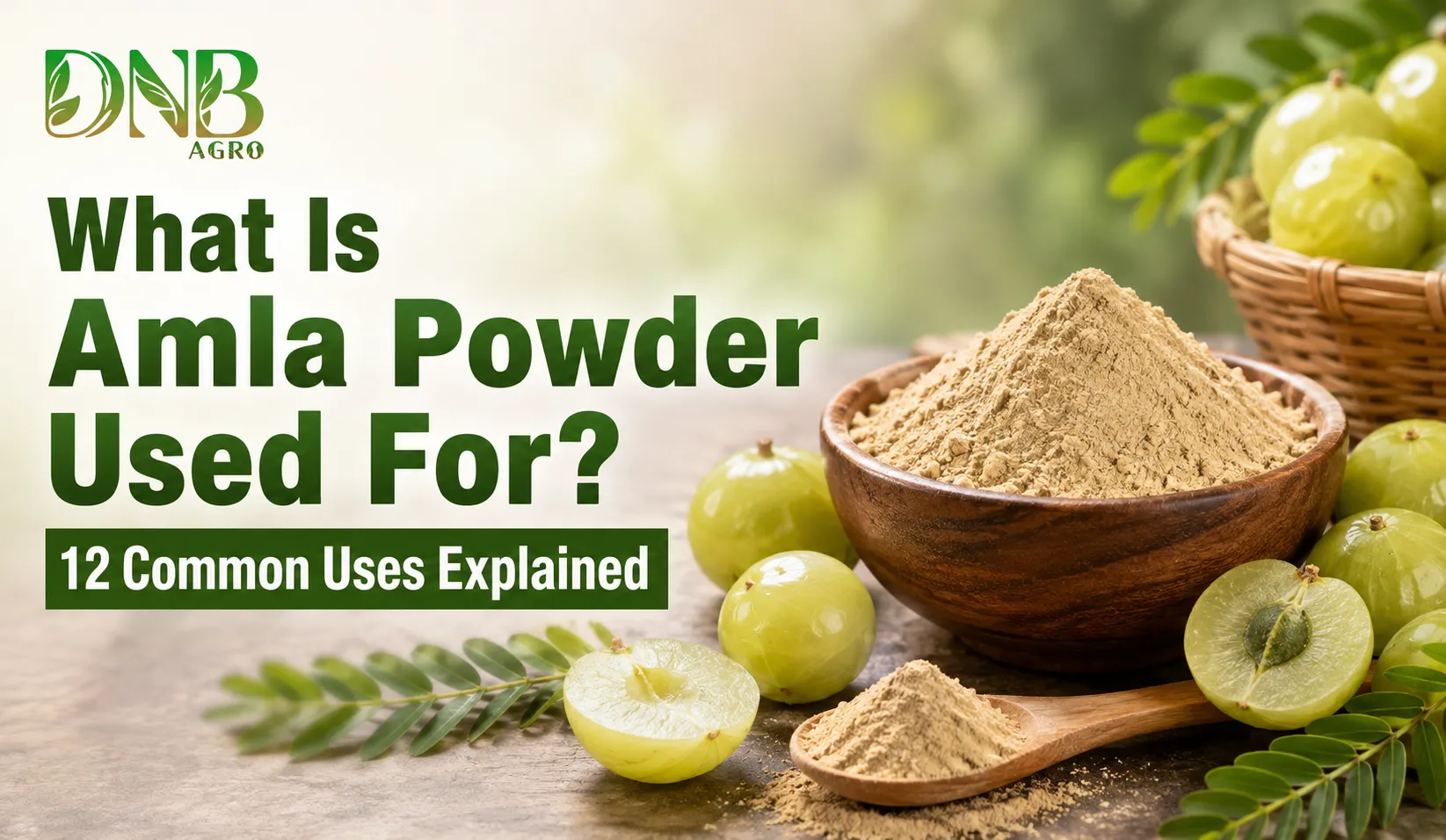
Amla powder can seem like a simple ingredient until you start looking at how many ways people use it. Made from dried Indian gooseberry, it can be mixed into drinks and foods, included in traditional wellness routines, or prepared as a hair or skin application.
The important distinction is that a use is not automatically a proven health benefit. Amla has a long history of traditional use, and the fruit contains vitamin C and other plant compounds, but evidence for specific health outcomes varies. Here is what people commonly do with amla powder, how those uses work in practice, and what to consider before using it.
What Is Amla Powder?
Amla powder is made from the dried fruit of Phyllanthus emblica, commonly called Indian gooseberry or amalaki. The dried fruit is processed into a fine powder that can be used as a food or herbal ingredient.
Amla is familiar in Ayurveda, where amalaki has traditionally been used in wellness preparations. Modern nutritional interest is also linked to the fruit's vitamin C and polyphenol content. The composition of a finished powder can vary depending on the fruit, drying method, processing, and product specifications.
Amla powder is different from amla juice, a concentrated extract, capsules, or amla oil. These formats can have different concentrations, ingredients, and intended uses, so they should not be treated as interchangeable.
12 Common Uses of Amla Powder
1. Add It to Water or Other Drinks
One of the simplest uses is mixing amla powder into water. Because amla is naturally sour, some people prefer it diluted in a larger drink or combined with other ingredients.
There is no universal serving size for every amla powder. Follow the product's label and intended-use instructions rather than assuming more is better.
2. Blend It Into Smoothies
Smoothies can make amla powder easier to incorporate into an everyday diet. Fruit, yogurt, or other ingredients can soften its sharp taste while allowing it to become part of a larger food or beverage.
3. Add It to Foods and Recipes
Amla powder can be used in recipes, dry mixes, functional foods, and other preparations where a tart fruit ingredient fits.
For commercial food manufacturers, powder is practical because it can be portioned and blended into dry formulations more easily than fresh fruit.
4. Use It as Part of a Digestive-Wellness Routine
Amla has traditionally been used in Indian wellness practices for digestive support. That traditional use is not the same as proving that amla powder treats indigestion, constipation, reflux, or another digestive condition.
People who experience persistent stomach symptoms should address the underlying issue rather than rely on a herbal powder alone. Amla's sour taste may also be poorly tolerated by some people.
5. Include It for Its Nutrients and Plant Compounds
Amla is valued for its vitamin C and various polyphenolic and tannin compounds.
Vitamin C has established roles in normal immune function, collagen formation, wound healing, and antioxidant protection. That does not mean taking amla powder will prevent or cure illness, but it helps explain its nutritional appeal.
Product specifications are more useful than assuming every amla powder is identical.
6. Use It as Part of an Antioxidant-Focused Diet
Amla contains plant compounds with antioxidant activity, which is one reason it appears in nutrition and wellness products.
In simple terms, antioxidants help protect cells from oxidative stress. However, laboratory antioxidant activity should not automatically be translated into claims that a product prevents cancer, slows aging, or treats chronic disease.
Amla powder is better viewed as one ingredient that can contribute plant compounds to an overall diet.
7. Include It in Traditional Ayurvedic Wellness Practices
Amla, or amalaki, has a long-standing role in Ayurveda and traditional Indian wellness. It is used in a variety of formulations and is sometimes discussed as a rasayana, a traditional category associated with long-term wellness.
For international readers, traditional use and clinical evidence should be kept separate.
8. Make an Amla Hair Mask
Amla powder is widely used in traditional hair care. A simple preparation involves mixing the powder with water or another suitable base to make a paste, applying it to the hair or scalp, and rinsing it out.
Some people combine amla with yogurt, coconut oil, shikakai, or reetha. These are traditional or cosmetic formulations, not guaranteed treatments for hair loss.
If you have a sensitive scalp, patch-test first and stop if burning, redness, itching, or other irritation develops.
9. Use It for Scalp Care
Amla powder can also be included in scalp-focused hair packs.
It is important not to turn this into a blanket hair-growth promise. Hair loss can have nutritional, hormonal, dermatological, and other causes. Persistent or significant hair loss may need professional evaluation.
10. Use It in Traditional Skin-Care Preparations
Amla powder can be mixed into a simple face or skin mask. People interested in this use often focus on its plant compounds and traditional role in herbal skincare.
Because powdered plant ingredients can irritate some people, patch-test first, avoid the eye area, and stop if irritation develops. A traditional face mask should not be treated as a proven treatment for acne, eczema, pigmentation, or other skin disease.
11. Blend It With Other Herbal Powders
Amla is commonly combined with other botanical powders, especially in traditional hair-care routines. Shikakai and reetha are familiar examples.
Blending is usually practical or traditional rather than proof of a special synergy. The more ingredients included, the more important it becomes to know what each contains and whether you tolerate it.
12. Use It in Commercial Food, Nutrition, and Wellness Formulations
Amla powder can be considered as an ingredient in nutritional blends, beverage mixes, functional foods, herbal products, and other formulation projects where the specification fits the application.
For commercial buyers, questions about moisture, particle size, microbiological testing, packaging, traceability, and batch consistency can matter just as much as the ingredient's traditional reputation.
How to Use Amla Powder in Practice
The right method depends on the intended use.
For oral use, follow the product label and use the recommended serving format. Water, smoothies, foods, and formulated drinks are common options.
For hair use, make a manageable paste and patch-test before applying it more widely.
For skin use, keep the formulation gentle, avoid sensitive areas, and stop if irritation develops.
For commercial formulations, work from the supplier's specification, certificate of analysis, application requirements, and target batch characteristics.
Most importantly, do not assume that a serving suggestion for one amla powder applies to every other product.
Amla Powder Uses vs. Amla Powder Benefits
This distinction is worth keeping clear.
“Using amla powder in a smoothie” describes an application. “Getting vitamin C or other plant compounds from amla” describes a nutritional property. “Treating a medical condition with amla” is a much stronger claim that requires appropriate clinical evidence.
A trustworthy article, product page, or supplier should keep those categories separate. Amla has legitimate nutritional and traditional relevance, but that does not justify promising a cure, guaranteed weight loss, hair regrowth, or disease prevention.
Amla Powder vs. Juice, Extract, Capsules, and Oil
A whole-fruit powder is not automatically equivalent to another amla product.
Amla juice is a liquid preparation. An extract may be more concentrated or standardized differently. Capsules and tablets are dosage forms, while amla oil is primarily used in topical hair or cosmetic products.
The best format depends on the intended use. For formulators, the ingredient specification matters more than marketing claims.
Is Amla Powder Safe for Everyone?
Amla powder is a natural ingredient, but “natural” does not mean risk-free for every person.
Some people may experience gastrointestinal discomfort or topical irritation. People taking medicines should also avoid assuming that an herbal ingredient is automatically compatible with treatment, particularly when blood sugar, blood pressure, or blood clotting are relevant.
Pregnant or breastfeeding people should seek qualified healthcare advice before using amla powder as a supplement, especially in concentrated amounts.
Anyone with a medical condition, significant symptoms, or a prescribed treatment plan should treat amla as an ingredient, not as a substitute for professional care.
How to Choose a Good Amla Powder
When buying amla powder, look beyond the word “natural.” Check what the product contains and whether its specifications match the intended use.
Useful questions include:
-
Is the ingredient clearly identified as amla or Phyllanthus emblica?
-
Are additives, colors, or preservatives listed?
-
Is a moisture specification available?
-
Is particle-size or mesh information available for commercial applications?
-
Is microbiological or other safety testing available where appropriate?
-
Can the batch be traced?
-
Does the packaging protect the powder from moisture and contamination?
-
Can the supplier provide a certificate of analysis or relevant documentation?
For commercial purchasing, consistent specifications matter because a powder suitable for one formulation may not suit another.
Why DNB Agro Is Relevant for Commercial Amla Powder Buyers
For businesses sourcing amla powder, the question is not simply whether the ingredient has a strong traditional reputation. The supplier also needs to show how the powder is processed, checked, packed, and identified from batch to batch.
DNB Agro, operated by Terrablend Agro Food Processing Private Limited, manufactures fruit, vegetable, spice, and superfood powders for commercial buyers. According to the company information supplied for this article, its process includes raw-material selection, cleaning and sorting, controlled drying, milling and sieving, quality inspection, and secure packing.
The company states that its quality process checks moisture, appearance, particle size, foreign matter, microbiological safety, and batch traceability. Its supplied business profile lists FSSAI licensing, ISO 22000 food safety management, HACCP-based processing controls, and export documentation capability.
For buyers, the practical takeaway is simple: evaluate an amla supplier on documentation, consistency, processing control, packaging, traceability, and suitability for the actual application, not only on the ingredient name.
Looking for amla powder for your business? Explore DNB Agro’s Amla Powder to learn more about the product, or contact DNB Agro to discuss bulk requirements, specifications, packaging, documentation, and supply needs.
Frequently Asked Questions
What is amla powder used for?
Amla powder is commonly used in drinks, foods, traditional wellness preparations, hair masks, scalp-care routines, skincare preparations, and commercial food or nutrition formulations.
How do you take amla powder?
Common approaches include mixing it into water, smoothies, or food. Follow the specific product's serving and preparation instructions because powders can differ in composition.
Can you take amla powder every day?
Some products are designed for regular use, but there is no single daily amount that applies to everyone. Follow the product label and consider your health circumstances and medications.
Can amla powder be used on hair?
Yes. Amla powder is commonly used in traditional hair masks and scalp-care preparations. Traditional use should not be presented as proof that it will regrow hair or treat hair loss.
Is amla powder a source of vitamin C?
Amla fruit is known for its vitamin C content, but the amount retained in a finished powder depends on processing and storage. Check the product's nutritional or laboratory specification for a meaningful figure.
Does amla powder have side effects?
Some people may experience stomach discomfort or topical irritation. Medication interactions and individual circumstances can also matter, so people with medical conditions or taking medicines should seek appropriate professional advice.
Choosing Amla Powder With the Right Purpose in Mind
So, what is amla powder used for? The answer is broader than a list of health claims. It can be used as a food and beverage ingredient, included in traditional wellness practices, prepared for hair and skin care, or incorporated into commercial formulations.
The better question is what you need the powder to do, what evidence supports that use, and what product specifications are appropriate for it.
For commercial buyers, that principle applies at a larger scale. A dependable supplier should be able to discuss processing, specifications, testing, packaging, traceability, and supply requirements clearly.
For businesses evaluating amla powder for nutritional blends, functional foods, wellness products, or other commercial applications, DNB Agro provides a sourcing option built around controlled processing and bulk ingredient supply.
Looking to source amla powder in bulk? Explore DNB Agro’s Amla Powder for product details, or contact DNB Agro to discuss your required specifications, packaging, order quantities, documentation, and supply needs.